
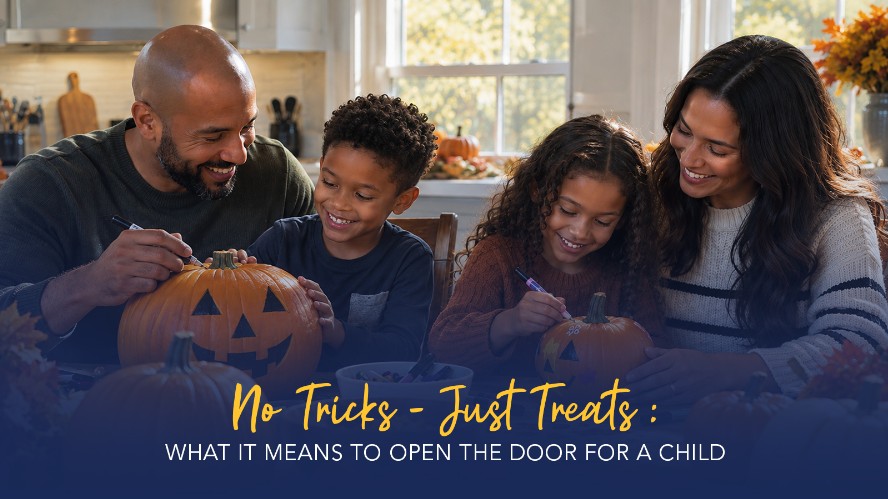
Fear of Halloween: No Tricks, Just Treats for Foster Families
How Can Foster Parents Help with a Child's Fear of Halloween?
Halloween can be an exciting chance for children to dress up, visit neighbors, attend school or community events, spend time with friends, and create fun seasonal memories. For many children in foster care, those experiences are simply part of the fun.
At the same time, Halloween can bring a wide range of reactions. Some children may find masks, frightening decorations, darkness, loud noises, or changes in routine uncomfortable. Others may feel sadness because familiar traditions with parents, siblings, or extended family have changed. For children who have experienced trauma, an ordinary sight, sound, or experience may also unexpectedly bring up difficult memories or emotions.
Foster parents and other caregivers can help by staying curious about what Halloween means to the individual child, talking about plans ahead of time, offering appropriate choices, and making room for both excitement and mixed emotions.
The goal is not to prevent every uncomfortable moment. It is to help create a Halloween experience that feels enjoyable, flexible, and supportive for the child in front of you.
Why Can Halloween Bring Mixed Emotions for Children in Foster Care?
Halloween can bring excitement, amusement, indifference, uncertainty, nostalgia, sadness, or several emotions at once.
A child may be thrilled to choose a costume, attend a school party, trick-or-treat with friends, or meet neighbors in a welcoming community. Those experiences can help create a sense of belonging and build positive memories with a foster family.
At the same time, some parts of the experience may feel uncomfortable. Masks, realistic decorations, loud sounds, crowded events, frightening movies, or changes in familiar routines can be difficult for some children.
Halloween traditions can also carry emotional meaning. A child may remember costumes, neighborhoods, siblings, parents, or family traditions from previous years and feel sad that those experiences have changed. Caregivers can acknowledge those memories without trying to replace them. Asking what the child remembers, what they would like to keep, and what new traditions they might enjoy can make room for both the past and the present.
For a child who has experienced trauma, something that seems harmless to someone else can also become a trauma reminder. The U.S. Children’s Bureau explains that triggers can include sounds, smells, places, feelings, tones of voice, and other experiences that resemble some aspect of an earlier traumatic event.
Understanding those individual responses is part of a trauma-informed approach to foster care, which emphasizes safety, predictability, trust, and providing children with appropriate opportunities for voice and choice.
The important point is that there is no single “foster care response” to Halloween. One child may count down the days, while another may want a quieter celebration, and another may move back and forth between excitement and sadness.
How Can Halloween Experiences Change with Age?
Age is only a starting point. Development, past experiences, temperament, personal preferences, and previous Halloween traditions all matter. The National Child Traumatic Stress Network emphasizes that children’s reactions to stressful and traumatic experiences vary by age and developmental stage.
Thinking in broad developmental stages can still help caregivers understand what may make Halloween especially enjoyable or challenging.
Young Children, Roughly Age 5 and Under
For younger children, Halloween may feel exciting, unfamiliar, or both. Masks can make familiar people look unrecognizable, decorations may seem real, and nighttime activities can disrupt routines that normally help them feel secure.
The American Academy of Pediatrics recommend talking young children through what will happen, reading about Halloween ahead of time, and helping them become familiar with costumes and traditions before the big day.
At this age, focus on helping children understand what is pretending, what will happen, and who will be with them.
Elementary School-Age Children, Roughly Ages 6-11
School-age children may understand that Halloween scares are make-believe and enjoy getting more involved in costumes, neighborhood activities, school events, and plans with friends. Some may still feel genuinely uncomfortable with certain scary elements. They may also become more aware of what friends and classmates are doing and feel pressure to participate.
At this age, give children more voice in deciding what feels fun, what feels too scary, and how they want to participate. Conversations about peer pressure can also help them feel more confident, saying no to an activity they do not enjoy.
Preteens and Teens, Ages 12 and Up
Older kids may be less concerned with costumes and decorations and more influenced by friends, parties, scary movies, haunted attractions, social media, and expectations about what they “should” enjoy. Halloween can become a social occasion at this age, giving teens a chance to spend time with friends, attend events, help younger children, or create traditions that feel more grown-up.
Give teens meaningful input into their plans and talk openly about peer pressure, personal boundaries, transportation, and how they can leave an uncomfortable situation. A teen may also simply decide that scary Halloween activities are not for them, and respecting that choice matters.
Age is only a starting point. Follow the individual child rather than assuming an activity is right for them because of their chronological age.
How Can Foster Parents Prepare a Child for Halloween?
Preparation can reduce the number of surprises without taking the fun out of the holiday.
Talk About Halloween Before Halloween
Ask what the child already knows about Halloween and how they have celebrated it in the past, if at all. Ask about favorite memories too: a costume they loved, a tradition they remember, a food they associate with Halloween, or people they used to celebrate with.
Then walk through what your family is considering for this year. If your family has favorite traditions, describe them, and ask whether there are traditions from the child’s past they would like to include too. Talk about who will be there, whether people will wear costumes, where you will go, whether it will be dark, how long you expect to stay out, what happens when someone answers the door, and what the family will do when you come home.
Adriel has written previously about how predictable routines can support emotional safety for foster children. Halloween does not have to follow the everyday schedule perfectly, but knowing what is coming can make a different kind of evening easier to navigate.
Ask What Sounds Fun, Meaningful, or Uncomfortable
Children do not all enjoy the same parts of Halloween. One child may be most excited about choosing a costume. Another may look forward to a school event, neighborhood trick-or-treating, baking with the family, or seeing friends. Someone else may want to avoid a haunted house, loud carnival, or frightening decorations.
Let the child help decide which familiar traditions they would like to keep and which new ones they might like to try. You can also check in about personal, cultural, or religious preferences. Some children and families prefer to avoid frightening, supernatural, or occult-themed costumes and activities. Halloween can still be playful without being scary.
Non-scary costume ideas might include animals, athletes, astronauts, scientists, artists or musicians, chefs, builders, firefighters, doctors or veterinarians, favorite foods, nature themes, book characters, or hobbies the child enjoys.
The best costume is one that sparks creativity and feels comfortable to the child wearing it.
Make Familiar Houses Part of the Plan
If trick-or-treating is new or intimidating, familiarity can help.
Walk the route before Halloween. Point out the houses you expect to visit. If it feels appropriate, say hello to trusted neighbors in advance, so the child has met some of the people who may answer the door.
Instead of approaching an unknown house in the dark, the experience becomes, “That’s the neighbor we met the other day.”
For some children, recognizing friendly faces along the route can also make trick-or-treating feel more like a neighborhood tradition they belong to.
Create an Exit Plan Before You Need One
Agree ahead of time on what will happen if the child has had enough. That could mean using a special word or hand signal, skipping a house, taking a short break, going home early, or switching to the family’s Plan B.
Three houses can be enough. So can zero. Changing the plan does not mean Halloween failed.
Fun Halloween Alternatives to Trick-or-Treating
Traditional trick-or-treating is not the only way to celebrate. Halloween alternatives might include handing out treats at home, decorating pumpkins, baking seasonal treats, watching a child-selected movie, attending a daytime event, spending time with familiar friends or family, or choosing a favorite fall activity that is not Halloween-themed at all.
Adriel’s Fun Fall Activities for Foster Families offers additional ideas for enjoying the season without making Halloween the focus.
An alternative can be just as memorable as traditional trick-or-treating, especially when the child has a voice in choosing it.
How Can Families Make Trick-or-Treating More Enjoyable and Predictable?
If trick-or-treating is part of the plan, keep the outing manageable and choose a route that feels familiar. Going earlier may help families who prefer less darkness or smaller crowds. Talk about candy expectations beforehand, review pedestrian safety, and pay attention to signs that the child may be ready for a break.
The American Academy of Pediatrics also recommends properly fitted costumes, bright or reflective elements, adult supervision for younger children, well-lit routes, and clear plans for older children.
Download the "No Tricks, Just Treats" Halloween Prep List
Every child and every Halloween are different. Adriel’s No Tricks, Just Treats Halloween Prep List gives foster families one place to think through age and stage, traditions, costumes, routes, comfort, safety, alternatives, and Plan B before the big night.
Use it as a conversation starter rather than a rigid checklist. The goal is to help the child have more voice in creating an experience that feels fun and comfortable for them.
Download the Halloween Prep List
How Neighbors Can Help Foster Families and Other Children This Halloween
A welcoming Halloween can help children feel connected to the community around them.
Neighbors may never know what experiences a child approaching their door brings with them, and they do not need to know. A friendly greeting, a well-lit walkway, and a little patience can help make the evening enjoyable for foster families and many other families too.
Consider these simple ways to help:
- Make sure your walkway and doorstep are well-lit.
- Keep surprise scares away from the walkway or front door so children can choose how much spooky fun they want.
- Be patient if a child does not say, “trick or treat,” make eye contact, wear a costume, or respond in the way you expect.
- Avoid teasing or pressuring a child about their costume, participation, or reactions.
- Talk with your own children about respecting friends who celebrate Halloween differently or not at all.
- If you host an event, tell families ahead of time what to expect.
Parents can use many of the same ideas in Adriel’s Halloween Prep List to prepare their own children to be thoughtful neighbors and friends.
A child does not owe anyone an explanation for why a costume, decoration, activity, or tradition makes them uncomfortable. A little flexibility can help more children enjoy the evening on their own terms.
For more ideas about supporting families beyond Halloween, see Foster Care Thrives When Communities Step Up.
No Tricks, Just Treats: Halloween Preparation Recap
Halloween can be a chance to create fun, connection, and new memories while still respecting the experiences a child brings with them.
- Ask what the child enjoys, remembers, and hopes to do this Halloween.
- Make room for excitement, discomfort, sadness, or mixed emotions without assuming how the child will feel.
- Adjust plans for the child’s age, developmental stage, interests, and individual needs.
- Preserve meaningful traditions when possible and invite the child to help create new ones.
- Offer choices and alternatives so the celebration can flex if plans change.
- Let connection, enjoyment, and the child’s sense of belonging define a successful Halloween.
Be the Treat This Halloween
Halloween is built around imagination, community, and the simple pleasure of giving a treat. Adriel’s No Tricks, Just Treats campaign carries that spirit beyond one night.
For children and families involved in foster care, support can take many forms: a foster parent helping a child create new traditions, a neighbor making Halloween welcoming, a community member encouraging a foster family, or someone deciding to learn more about becoming a foster parent.
This October, Adriel is inviting people across Ohio to “be the treat” by helping foster families feel supported and helping children experience the safety, stability, and care they deserve.
Ways to help:
- Download/share the Halloween Prep List with a foster, kinship, or other family who may find it helpful. Download the list
- Learn more about becoming an Adriel foster parent and the support available to foster families.
- Support Adriel’s work with children and families in Ohio.
FAQs About Fear of Halloween
Why might a child have mixed feelings about Halloween?
Halloween can be exciting and fun, but it may also bring unfamiliar sights, loud sounds, scary imagery, changes in routine, or memories of past family traditions. A child may feel happy, nervous, sad, or several things at once.
How can foster parents help with a child's fear of Halloween?
Start by asking what the child enjoys, remembers, and finds uncomfortable. Explain plans in advance, offer appropriate choices, and allow the child to participate in ways that feel manageable. The goal is to support a positive experience, not to force a particular version of Halloween.
What are some Halloween alternatives to trick-or-treating?
Halloween alternatives include handing out treats, decorating pumpkins, baking, playing games, watching an age-appropriate movie, attending a daytime event, having a small gathering, or choosing a favorite fall activity that has nothing to do with Halloween.
How can foster parents support a child who misses past Halloween traditions?
Ask what the child remembers and what traditions still matter to them. When possible, preserve familiar foods, activities, costumes, or rituals while inviting the child to help create new traditions. Acknowledging what has changed can be just as important as creating something new.